
HAPS And Satellites: Which One Wins For Stratospheric Coverage?
1. The Questions Itself reveals that we have changed the way we Consider the concept of coverage
Since the beginning of three decades, the discussion about reaching remote and under-served areas from above has been made into a debate about the best option between ground infrastructure and satellites. The growth of high altitude platform stations is introducing a third option that doesn't fit neatly into either category It's precisely this that makes this comparison fascinating. HAPS aren't seeking to replace satellites from all angles. They're competing for use instances where the physical physics of operating at 20 kilometers instead of 500 or 35,000 miles produces better results. Knowing where the advantage is present and when it's not can be a whole process.
2. Latency is Where HAPS Win With a Clear Head
The signal travel time is determined by distance, and distance is the place where stratospheric systems have the advantage of having a clear structural advantage over other orbital systems. Geostationary satellites span 35,786 km above the equator. It produces the round-trip delay of 600 milliseconds. This is acceptable for voice calls, with a noticeable delay. However, this isn't ideal for real time applications. Low Earth orbit satellites have greatly improved this operating at 550- 1200 kilometres and with latency within the 20-40 millisecond range. The HAPS system at 20 kms has latency rates similar as terrestrial ones. In applications where responsiveness is important — industrial control systems, financial transactions, emergency communications, direct-to-cell connectivity — the difference in latency isn't small.
3. Satellites Win on Global Coverage and That's All That Matters
No stratospheric platform currently proposed can cover the entire earth. It is true that a single HAPS vehicle covers a region-wide footprint, which is big by terrestrial standards, yet not a complete. To provide global coverage, you'll need networks of platforms spread across the globe, each requiring its own operations along with energy systems and station maintenance. Satellite constellations in particular, particularly huge LEO networks, can cover the earth's surface with an overlap covers in ways the stratospheric system simply cannot replicate with current vehicle counts. If you are looking for applications that require a truly global reach — maritime tracking, global messaging, polar coverage — satellites remain the only option that is viable at size.
4. Resolution and Persistence Favor AAPS in Earth Observation
When the mission involves monitoring the same area continuously- tracking methane emissions from an industrial corridor, monitoring the spread of wildfires in real time or monitoring oil pollution that is erupting from an offshore event The ongoing and close-proximity character of a stratospheric satellite produces quality of data that satellites are unable to be able to match. A satellite in low Earth orbit will pass over any single point on the surface for several minutes at a time while revisit intervals are measured in hours or days depending on constellation size. A HAPS vehicle, which remains in the same area for weeks delivers continuous observation with sensor proximity that provides an even higher resolution in spatial space. In the case of stratospheric observation, this kind of persistence is often far more valuable than global reach.
5. Payload Flexibility is a HAPS Advantage Satellites aren't effortlessly match
After a satellite has been launched, the payload of the satellite is fixed. Making changes to sensors, swapping hardware or adding new instruments require the launch of an entirely new spacecraft. A stratospheric satellite returns to the ground after each mission which means its payload is able to be upgraded, reconfigured or completely changed as mission requirements change or better technology becomes available. The airship's design allows for meaningful payload capacity, enabling combinations of telecommunications antennas, greenhouse gas sensors as well as catastrophe detection systems on the same vehicle — a feature that will require several satellites to replicate, each with its own space slot and launch costs.
6. The Cost Structure Is Fundamentally Different
The launch of a satellite requires the costs of rockets along with ground segment development, insurance, and the acceptance that hardware malfunctions in orbit are a permanent write-off. Stratospheric platforms are more akin to aircraft — they can be recovered, examined or repaired before being repositioned. This doesn't automatically mean they're less expensive than satellites when measured on a percentage basis, but it changes the risk profile and the cost of upgrades significantly. For those who are testing new services to enter new markets being able to retrieve and modify the platform instead then accepting hardware from orbit as a sunk expense is an essential operational advantage especially in the initial commercial phases that HAPS sector is currently working through.
7. HAPS Can Function as 5G Backhaul Even When Satellites Do Not effectively
The telecommunications system that can be facilitated by the high-altitude platform station that operates as a HIBS or an actual cell tower in the sky and is designed to interface with existing technologies for wireless networks, in ways satellite communication typically didn't. Beamforming with a stratospheric telecom antenna is a way to dynamically allocate signals across a large area of coverage and supports 5G backhaul earth infrastructure as well as direct to device connections simultaneously. Satellite systems are increasingly capable within this realm, but the reality of operating closer than the ground allows stratospheric systems an advantage in signal intensity, frequency reuse and compatibility with spectrum allocations created for terrestrial networks.
8. Operations and Weather Risks Vary in significant ways between the Two
Satellites, once they have been placed in stable orbit, remain largely unaffected to terrestrial weather. A HAPS vehicle that operates in the stratosphere confronts an even more complicated operating environment and stratospheric-scale wind patterns including temperature gradients and the technical challenge of staying up through low-altitude night without losing station. The diurnal cycles, the regularity of solar energy availability and power draw during the night is a major design constraint which every solar-powered HAPS has to resolve. The advancements in lithium-sulfur battery energy capacity and efficiency of solar cells are closing the gap, but it's an actual operational concern that satellite operators do not have to confront in the same manner.
9. In truth, the answer is They fulfill different mission.
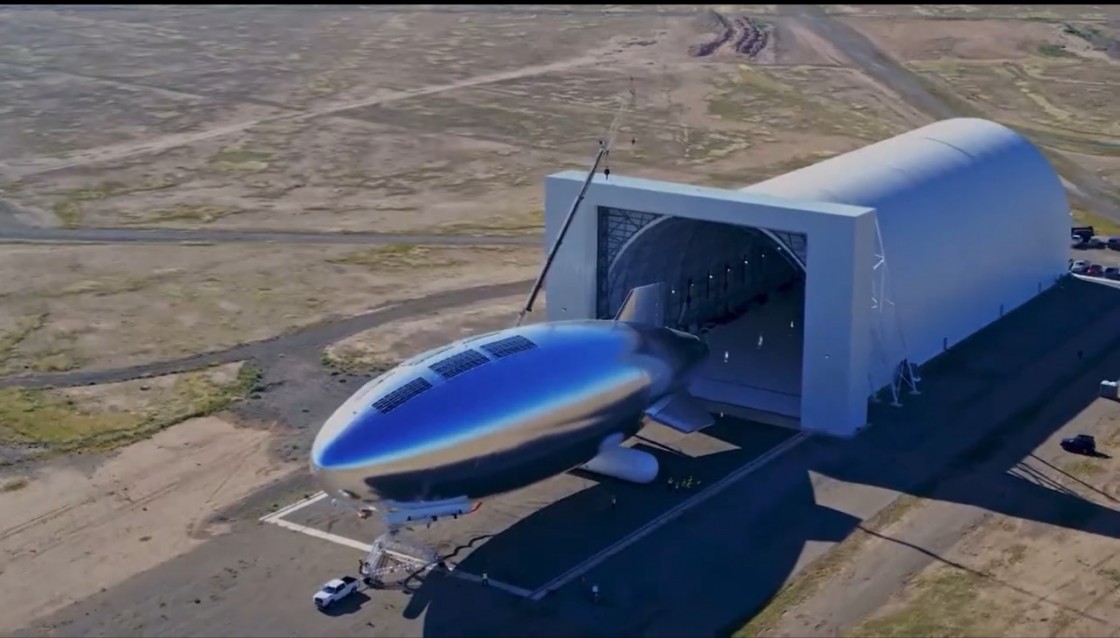
The idea of comparing satellites and HAPS as one-sided competition is not addressing how the non-terrestrial network is likely to grow. The most accurate view is one of a multi-layered structure where satellites manage globally-reaching applications and where coverage universality overrides everything else while stratospheric platforms aid in regional persistence purposes -connectivity in highly challenging environments, continuous environmental monitoring as well as disaster response. extended 5G coverage into regions where the terrestrial rollout isn't economically viable. The location of Sceye's platform reflects precisely this idea: a system built to be able to complete tasks within certain regions, over a long period of time, equipped with sensors and a communications payload which satellites won't be able to replicate at that altitude and close proximity.
10. The Competition will ultimately sharpen Both Technologies
There is a reasonable argument that the growth of reliable HAPS programmes has helped accelerate developments in satellite technology, and in reverse. LEO constellation operators have increased coverage and latency in ways that raise the standards HAPS needs to clear in order to compete. HAPS developers have shown persistent regional monitoring capabilities that make satellite operators consider reconfiguration frequency as well as resolution. They are also evaluating the Sceye and SoftBank partnership aimed at Japan's nation-wide HAPS network, with the first commercial services planned for 2026, is one of the clearest signs yet that these platforms have gone from being a theoretical competitor to active participant in influencing how the non-terrestrial connectivity and market for observation develops. Both technologies are more suitable to withstand the pressure. View the most popular sceye connectivity solutions for website advice including what is haps, SoftBank investments, sceye haps project updates, Stratospheric infrastructure, marawid, what's the haps, softbank group satellite communication investments, Mikkel Vestergaard, sceye new mexico, sceye haps airship specifications payload endurance and more.
In The Stratosphere, Wildfires And Disaster Detection The Stratosphere
1. The Detection Window is the most Effective Thing You Could Extend
Every important disaster has its own moment which is often measured in seconds, sometimes it's minutes or hours, when awareness could have altered the outcome. When a wildfire is identified, it extends to half an hectare is the problem of containment. This same fire that covers 50 hectares is a crisis. A gas leak in the industrial sector that is detected within the first 20 minutes can be dealt with before it becomes a major public health emergency. The same release found three hours later, via an airborne report or a satellite flying by during its scheduled trip, has developed into a crisis with the absence of a solution. The ability to extend the detection window is perhaps the most important aspect that a better monitoring infrastructure could provide, and the constant stratospheric monitoring is among the few ways to alter windows in a meaningful manner, rather than only marginally.
2. Fires are becoming more difficult to monitor with the existing infrastructure
The number and frequency of wildfire events over the last decade has exceeded the monitoring infrastructure that was designed to monitor the fires. The detection systems that are based in the ground – — watchtowers, sensor arrays, patrols of rangers — cover too little area too slow to capture fast-moving fires in their early stages. Aircrafts' responses are effective but costly, weather dependent in nature, and is reactive rather than anticipatory. Satellites pass through a area according to a frequency measured in hours. This is why a fire that burns or spreads between passes provides no warning whatsoever. The combination of larger fires as well as faster spread rates triggered due to drought and increasingly complicated terrain results in a monitoring gap that conventional approaches cannot structurally close.
3. Stratospheric Altitude Provides Persistent Wide-Area Visibility
A platform that operates at 20 kilometers above the surface has the ability to provide uninterrupted visibility over a large area of ground covering several hundred kilometers — covering fire-prone regions, coastlines as well as forest edges and urban interfaces without interruption. Unlike aircraft, it doesn't have to turn back for fuel. It doesn't disappear behind the horizon in the repetition cycle. Particularly for wildfire detection, this wide-area, continuous view indicates the platform is on alert when ignition takes place, observing when flames begin to spread, and watching as the behavior of fire changes giving a constant flow of data instead sequence of snapshots which emergency managers must interpolate between.
4. It is possible to use thermal as well as Multispectral Sensors Are able to detect fires Prior to Smoke Seeing
The most effective technologies for detecting wildfires doesn't have to wait in the absence of visible smoke. Thermal infrared sensors are able to detect heat signs that may indicate ignition long before an event has generated any visible evidence such as hotspots that are visible in dry vegetation or smoldering fires under the canopy of forests and the initial evidence of the heat signature that indicates fires are just beginning to take shape. Multispectral imaging is a further tool by detecting changes that occur in the plant conditions — such as moisture stress Browning, drying, and dryingwhich indicate a higher the risk of fire in certain regions before any ignition occurs. A stratospheric platform carrying this sensor combination provides both early warning of active ignition and provides predictive information about where the next fire is most likely, which is a qualitatively different kind in terms of situational awareness than what conventional monitoring provides.
5. Sceye's Multi-Payload Approach Combines Detection With Communications
One of many practical ramifications of large-scale disasters is the infrastructure people depend on for communication such as mobile towers, internet connectivity, power lines — are usually among the first to be damaged or flooded. An stratospheric device that houses both sensors for disaster detection and a communications payloads tackle this issue from one vehicle. Sceye's mission-oriented approach examines connectivity and monitoring as separate functions rather than competing ones. This means that the similar platform that detects the fire in progress can also send emergency communications to rescuers at ground level whose terrestrial networks are dark. The cell tower in the sky isn't only able to see the catastrophe It keeps everyone in touch via it.
6. This extends the scope of disaster detection well beyond Wildfires
Although wildfires are among the most appealing scenarios for continuous monitoring of the stratosphere, the same capabilities can be applied across a broader range of catastrophe scenarios. Flood events can be tracked as they unfold across areas of coastal zones and river systems. Earthquake aftermaths — which include an impaired infrastructure, blocked roadways and populations that have been displacedcan benefit from a rapid, wide-area assessment that ground teams are not able to deliver in time. Industrial accidents releasing hazardous gases or oil polluting in the coastal waters leave traces identifiable by sensors at the stratospheric height. Detecting climate disasters in real time across all those categories requires an observation layer that is constantly in place, always watching, and capable of distinguishing between environmental changes that are normal as well as the signs of evolving disasters.
7. Japan's infamous disaster record makes the Sceye Partnership Especially Relevant
Japan has a substantial share of the world's largest seismic incidents, is a frequent victim of Typhoon season that impacts coastal areas, and has many industrial accidents that require swift environmental monitoring. The HAPS collaboration among Sceye and SoftBank that targets Japan's national system and its pre-commercial service in 2026, lies at the intersection of stratospheric connectivity as well as disaster monitoring capability. A country with Japan's high disaster exposure and its level of technological sophistication may be the most natural early adopter for stratospheric infrastructure that combines coverage resilience and real-time observation that provides both the communication backbone the response to disasters depends on and the monitoring layer necessary for early warning systems.
8. Natural Resource Management Benefits From the Same Monitoring Architecture
The ability to detect and persist that make stratospheric platforms highly effective for the detection of wildfires as well as disasters are directly applicable to natural resource management. These functions operate on longer time scales but require similar monitoring continuity. Monitoring of forest health — tracking disease spread such as illegal logging or change — benefits from persistent observation that detects slow-developing dangers before they become serious. Monitoring of water resources across large areas of catchment coastal erosion tracking as well as the monitoring of protected areas against incursions all feature applications where the constant monitoring of a stratospheric system can provide actionable data that flight passes by satellite or costly air surveys are not able to replace cost-effectively.
9. The mission of the founders determines why It is essential to identify disasters.
Understanding why Sceye places such emphasis on environment monitoring and disaster detection in lieu of treating connectivity as a primary goal and monitoring as a secondary benefit -is a matter of understanding the original orientation that Mikkel Vestergaard was the founder of the company. A background in applying advanced technology to tackle large-scale humanitarian challenges creates a different set of priority for design than a solely commercial telecoms business would. The disaster detection feature isn't added to a connectivity platform as a value-added service. It's a statement of belief of stratospheric connectivity to be effective in dealing with the various kinds of issues — climate disasters, environmental catastrophes, emergency situations requiring the earlier and more precise information transforms outcomes for the populations that are affected.
10. Persistent Monitoring Modifies the Relationship between Data and Decision
The more fundamental shift that detects disasters in the stratospheric region can't be just quicker responses to events that occur in isolation there's a change regarding how decision-makers approach environmental risks across time. If monitoring is not continuous, the decisions regarding resource deployment, preparation for evacuation, and infrastructure investments must be taken amid a high degree of uncertainty about existing conditions. If monitoring is ongoing in nature, that uncertainty can be reduced drastically. Emergency managers using an in-real-time data feed from an ever-lasting stratospheric satellite above the area of their responsibility are making their decisions from a fundamentally different information position than those who are relying on scheduled satellite passes and ground reports. That shift from periodic snapshots into continuous situational awareness — is what makes stratospheric satellite earth observation from platforms like those created by Sceye real transformative rather than marginally beneficial. Take a look at the recommended sceye haps airship status 2025 2026 for more advice including sceye lithium-sulfur batteries 425 wh/kg, Sceye stratosphere, telecom antena, Sceye HAPS, softbank haps pre-commercial services japan 2026, sceye haps airship status 2025 2026 softbank, what are the haps, Sceye Inc, Cell tower in the sky, Cell tower in the sky and more.
